פורסם עם: להיות טייס
פגישה בפולין
מאת: דרור ארצי
פגשנו בפולין את המטוס החביב על הפולנים מטוס הווילגה דמוי היתוש, ראינו אותו בדגם המקורי שלו דגם 35 ובתצורה המערבית שלו דגם 2000, ביצועי ההמראה והנחיתה הקצרים של המטוס היו מרהיבים אז, לא התעצלנו ולמדנו קצת על המטוס
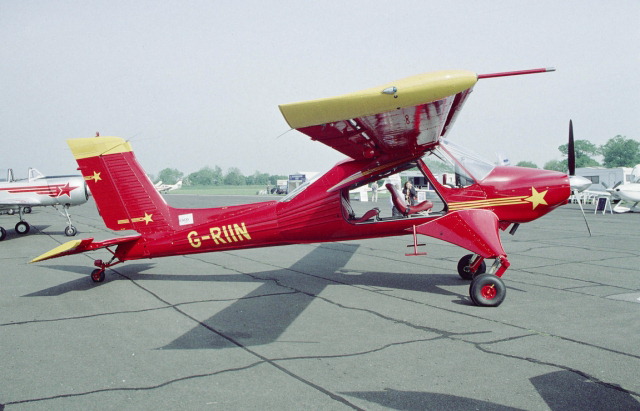
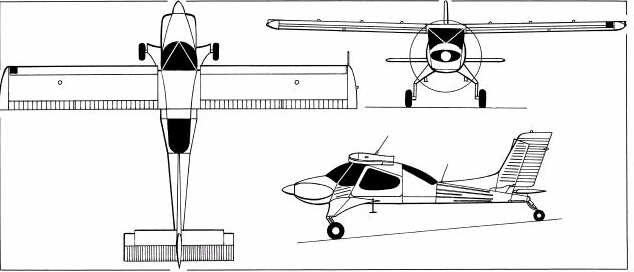
WILGA 2000
אב הטיפוס הראשון טס באפריל 1962.
עד עתה יוצרו 962 מטוסים, לא כולל את אלה שיוצרו באינדונזיה (תחת השם LIPNUR GELATIK)
ווילגה 2000 הוא דגם משופר של ה-35 והוא פותח עבור השוק המערבי.
טיסה ראשונה של דגם זה הייתה ב 1996 ותחילת הייצור הסדרתי באמצע 1997.
למטוס גם דגם ימי עם מצופים שטס לראשונה בסוף 1999.
המטוס מיועד לנחיתות והמראות קצרות STOL והוא בעל כן-נסע שמאפשר נחיתות קשות.
כנף המטוס מצוידת במדף קדמי קבוע -SLAT לאורך כל שפת ההתקפה. המבנה כולו מתכתי.
המטוס מצויד במנוע לייקומינג 300 כ"ס ומדחף 3 להבים בעל פסיעה קבועה.
400 ליטר דלק ממוקמים במיכלים אינטגרליים בכנף. המטוס כולל 4 מושבים – טייס ו 3 נוסעים.
המטוס מצויד באוויוניקה מערבית של BENDIX/KING .
עפ"י הספר המטוס ממריא מ 272 מ' ונוחת על 150 מ' – במציאות הוא עושה זאת בפחות.
ושאר הנתונים המפורטים להלן:
EADS PZL
EADS PZL PZL-104M WILGA 2000
English name: Oriole
Type : Four-seat lightplane.
Programme : First flight of prototype Wilga 1, 24 April 1962. Total of 962 of all earlier versions (except Indonesian licence-built Lipnur Gelatik) built by 1996, some of which stored and later supplied from stock, including one Wilga 80 in 1999.
Wilga 2000, improved version of Wilga 35, developed to appeal to Western markets, principally through use of Western engine and avionics. Wing and nose modifications tested on Wilga 35A SP-CSG. First flight of Wilga 2000 prototype (SP-PHG, later -WHG) 20 August 1996; first production (SP-AHV) in mid-1997; FAR Pt 23 certification achieved in 1997. SP-PHG won 1st World Air Games, 1997.
Current Versions
PZL-104M Wilga 2000: Standard landplane version; as described.
PZL-104MN Wilga 2000: Designation of 2001 and subsequent production. FAR Pt 23 certification 25 February 2002. From 2003, production aircraft have 1,500 kg (3,306 lb) MTOW and approximately 925 kg (2,039 lb) empty weight, reflecting improvements of 100 kg (220 lb) and 50 kg (110 lb), respectively.
PZL-104MW Wilga 2000 Hydro: Floatplane version; first flight 11 September 1999. Maximum T-O weight 1,500 kg (3,306 lb); performance generally similar to landplane except T-O run from water 180 m (590 ft) and S/L climb rate 210 m (689 ft)/min. North American demonstrator under conversion in 2003 by Sealand Aviation of Vancouver, Canada.
Customers
Ten reported orders for Wilga 2000 by late 1996, including four for Polish National Aeroclub and three for export. First two deliveries in 1997 to Polish Aeroclub and private owner; five built in 1998 and delivered under 1997 contract to Polish Border Guard, first one being handed over 1 June 1998; one built in 1999, delivered to UK as demonstrator in May 2000. None built in 2000. At least five built in 2001, increasing production to 14 (including prototype); no known 2002 production. Chinese interest reported in 2003.
Design Features
Suitable for wide variety of military, general aviation and flying club duties; STOL performance bestowed by flaps and slats allied to heavy-duty landing gear. High-mounted cantilever wings; braced tail unit; tall landing gear legs. In addition to Western equipment, Wilga 2000 features increased fuel, strengthened wing with integral fuel tanks and shorter mainwheel legs enclosed in fairings.
Wing section NACA 2415; dihedral 1÷; incidence 8÷ 32'.
Flying Controls
Conventional and manual. Aerodynamically and mass-balanced slotted ailerons; tab on starboard aileron; aerodynamically, horn- and mass-balanced one-piece elevator and rudder; trim tab in centre of elevator; manually operated slotted flaps; fixed slat on wing leading-edge along full span. Aileron movement 26÷ up/16÷ down; elevator 38÷ up/18÷ down; elevator tab 20÷ up and down; rudder 26÷ left/right; flaps 0÷ up/21÷ down.
Structure
All-metal, with beaded skins; single-spar wings, with leading-edge torsion box; fuselage in two portions, forward incorporating main wing spar carry-through structure; rear section is tailcone; cabin floor of metal sandwich, with paper honeycomb core, covered with foam rubber; aluminium tailplane bracing strut.
Landing Gear
Non-retractable tailwheel type. Semi-cantilever main legs, of rocker type, have oleo-pneumatic shock-absorbers. Low-pressure tyres. Hydraulic brakes. Steerable tailwheel, carried on rocker frame with oleo-pneumatic shock-absorber. Metal ski landing gear optional. Airtech Canada CAP 3000 twin-float gear on Wilga 2000 Hydro.
Power Plant
One 224 kW (300 hp) Textron Lycoming IO-540-K1B5, -K1D5 or -K1JED flat-six engine, driving a Hartzell HC-C3YR-1RF/F8468A-6R three-blade constant-speed propeller. Fuel in integral wing tanks, total capacity 400 litres (106 US gallons; 88.0 Imp gallons), of which 380 litres (100.4 US gallons; 83.6 Imp gallons) are usable. Oil capacity 11.4 litres (3.0 US gallons; 2.5 Imp gallons).
Accommodation
Passenger version accommodates pilot and three passengers, in pairs, with adjustable front seats. Baggage compartment aft of seats, capacity 30 kg (66 lb). Rear seats can be replaced by additional fuel tank for longer-range operation. Upward-opening door on each side of cabin, jettisonable in emergency.
Avionics
Comms: Bendix/King KX 155 main nav/com/glideslope and KY 96A standby VHF transceiver; KT 76A transponder; KMA 24 audio control/MKR; intercom.
Flight: Bendix/King KLN 89B GPS receiver and KR 87 ADF.
Instrumentation: ASI, VSI; ADF, VOR and twin indicators; artificial horizon; directional gyro; magnetic compass; altimeter; stall warning device; signalling and warning panel; clock; rpm tachometer; standard fuel/pressure/temperature gauges and indicators.
Mission: Polish Border Guard aircraft equipped with FLIR.
Equipment
Heavy-duty glider-towing hook, release handle and towing mirrors available as option.
Dimensions, External
Wing span | 11.12 m (36 ft 5½ in) |
Wing chord, constant | 1.40 m (4 ft 7 in) |
Wing aspect ratio | 8.2 |
Length overall: 2000 | 8.10 m (26 ft 6½ in) |
2000 Hydro | 8.52 m (27 ft 11½ in) |
Height overall: 2000 | 2.96 m (9 ft 8½ in) |
2000 Hydro: on water | approx 3.00 m (9 ft 10 in) |
on land | 3.57 m (11 ft 8½ in) |
Tailplane span | 3.70 m (12 ft 1½ in) |
Wheel track | 2.75 m (9 ft 0¼ in) |
Wheelbase | 6.70 m (21 ft 11½ in) |
Distance between float c/l: | |
2000 Hydro | 2.48 m (8 ft 1½ in) |
Propeller diameter | 2.03 m (6 ft 8 in) |
Passenger doors (each): Height | 0.90 m (2 ft 11½ in) |
Width | 1.50 m (4 ft 11 in) |
Dimensions, Internal
Cabin: Length | 2.20 m (7 ft 2½ in) |
Max width | 1.20 m (3 ft 10 in) |
Max height | 1.50 m (4 ft 11 in) |
Floor area | 2.20 m2 (23.8 sq ft) |
Volume | 2.40 m3 (85 cu ft) |
Baggage compartment | 0.50 m3 (17.5 cu ft) |
Areas
Wings, gross | 15.00 m2 (161.5 sq ft) |
Tailplane | 3.16 m2 (34.01 sq ft) |
Elevator, incl tab | 1.92 m2 (20.67 sq ft) |
Weights and Loadings
Weight empty | 975 kg (2,150 lb) |
Max T-O and landing weight | 1,400 kg (3,086 lb) |
Max zero-fuel weight | 1,360 kg (2,998 lb) |
Max wing loading | 93.3 kg/m2 (19.12 lb/sq ft) |
Max power loading | 6.26 kg/kW (10.29 lb/hp) |
Performance (landplane)
Never-exceed speed (VNE) | 131 kt (243 km/h; 151 mph) |
Max level speed | 113 kt (211 km/h; 131 mph) |
Cruising speed at 75% power | 103 kt (190 km/h; 118 mph) |
Stalling speed: flaps up | 58 kt (106 km/h; 66 mph) |
flaps down | 49 kt (89 km/h; 56 mph) |
Max rate of climb at S/L | 293 m (961 ft)/min |
Service ceiling | 4,118 m (13,510 ft) |
Max range | 809 n miles (1,500 km; 932 miles) |
T-O run | 272 m (895 ft) |
Landing run | 150 m (495 ft) |
|