פורסם עם: General Aviation

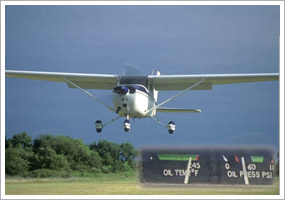
PRECAUTIONARY OR EMERGENCY LANDING?
The flight instructor idles the throttle and announces, "You've lost your engine." As a well-practiced student pilot, you commence the drill to bring about a successful conclusion to the simulated emergency. Maybe the result was a successful off-airport landing approach (discontinued at a safe altitude). Perhaps you stabilized the aircraft in a power-off glide and achieved engine restart—it depends on what scenario your CFI handed you.
Many airborne difficulties, while not as traumatic as sudden engine stoppage, still require swift decision making. An engine gauge or electrical-system instrument enters the red zone. Fuel runs low, weather deteriorates, or you get lost. These are not outright emergencies, but they could escalate without quick action. Laymen rarely grasp the difference between a precautionary landing performed under such circumstances and an "emergency landing"—as the reporting of such an event is likely to be headlined—but the differences are many.
"Precautionary landings offer several advantages over forced landings. You can use power to reach an airport or landing site beyond your gliding distance or to compensate for errors in judgment or technique," Robert N. Rossier wrote in the feature "Emergency Landings" available on AOPA Flight Training Online.
The basic idea is that pilots opt to make precautionary landings to avoid having to make emergency landings after exhausting other alternatives. In the February 2006 AOPA Pilot feature "Precautionary Tales," Julie K. Boatman looked at this notion through the eyes of pilots who exercised the precautionary-landing option. "When we asked AOPA members to share their tales of similar events, all expressed satisfaction that their decisions to stop and check into a problem were sound ones—regardless of the outcome. And many credit the precautionary landing with helping them avoid an emergency, with its more serious consequences. In fact, it could be one of the most important pilot-in-command decisions you make—a display of initiative rather than undue caution," she wrote.
Pilots must know the available resources, inside and outside the cockpit, to make decisions that keep problems from becoming emergencies, notes Chapter 16 of the Pilot's Handbook of Aeronautical Knowledge on aeronautical decision making. Review the chapter's systematic approach to risk management—another excellent tool to keep problems from blossoming into emergencies. For more information on aeronautical decision making, see the AOPA Air Safety Foundation's Safety Advisor, Do the Right Thing: Decision Making for Pilots.